 Indonesia
Management SystemInviting the
community to sort, manage, and process their household waste is the key to
overcoming the increasing volume of waste. This is because, based on data from
the Ministry of Environment and Forestry (KLHK) in 2021, of the total 41.38
million tons of waste produced by the Indonesian people, almost half (45.9%) is
household waste. Of that amount, as many as 26.96 million tons are considered
not to be managed properly.
This awareness of managing waste from
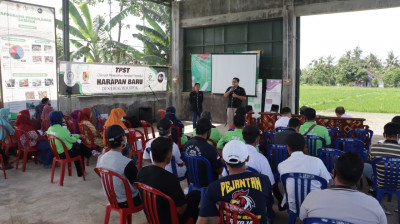
upstream has prompted the Dukuhdempok Village Government, Imaji Sociopreneur,
and PT Universal Tempu Rejo to inaugurate the Harapan Baru Integrated Waste
Management Site (TPST) on Wednesday, February 23, 2022. Located in Gawok
Hamlet, Dukuhdempok Village, Wuluhan District, Kabupaten Jember, East Java, the
10 x 15 meter TPST building was originally intended to be a center for managing
organic and inorganic household waste produced by rural communities.
Director of the Environmental Program
Imaji Sociopreneur Rohman Abadi said the inauguration of the TPST was the first
step to realizing an independent and integrated waste management system with
various waste banks and community elements. So, he said, waste that has been considered
a problem will not only be managed, but also can be an alternative income for
the community.
"As the name implies, this TPST
is a new hope for realizing an integrated, independent, and impactful waste
management system in terms of both the environment and the economy," he
said.
He also hopes that after operating in
early March 2022, the Harapan Baru TPST will not only become a center for
sorting, managing and sorting waste, but also a symbol and pioneer regarding
the importance of managing waste from upstream, namely the community.
"In the end, this waste problem
must be overcome together, mainly from the awareness of the community
itself," he added.
On the other hand, the Head of
Dukuhdempok Village, Miftahul Munir, explained that so far there have been many
waste banks and communities managing organic and inorganic waste in his
village. The presence of TPST, according to him, will fulfill the waste
management ecosystem and become the center of the activities of the various
communities.
“In the past, waste management was
community-based, now that there is a TPST, everything can be connected and
integrated. Because, TPST will not only manage inorganic waste, but also
organic waste through maggot," he said.
He also hopes that the presence of
the TPST can help change the community's stigma regarding waste. Through waste
management, added Munir, not only save the environment, but also can have an
economic impact on the community.
"Waste has always been considered worthless, we will slowly introduce it that if it is managed properly, it can turn out to be additional income for the community," he explained. (*)