
 Indonesia
Every Sunday, at around 08.30 WIB at
the Saka Wetan Kiprah Studio, Krajan Hamlet, Kesilir Village RT 05 RW 01, Avied
Sanjaya turns his yard into a reog practice place for children.
For the past three months, dozens of
boys and girls from kindergarten to elementary school have been practicing reog
and a number of East Javanese arts there.
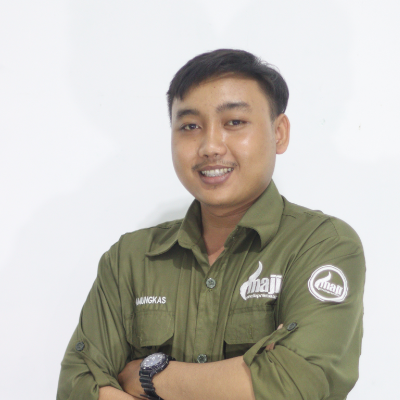
Haryo Pamungkas and Sonia Nurdiansa
from Imaji Sociopreneur had the opportunity to chat with Avied, the 4th
generation studio manager when they visited his house on Sunday, September 26,
2021.
Accompanied by reog music playing and
the laughter of children practicing, we chatted at length about the history of
the studio, his efforts to instill the values of the reog tradition in
children, until his concern over finding the value of the reog tradition began
to shift.
What is the history of this reog
studio, Mas?
I just founded the Gait Saka Wetan
studio in 2019. This studio is still under the Singo Mudo studio community
which is managed by my Pakdhe. Regarding the history of the studio, I can only
tell you that it was my Mbah Buyut who started it.
When was that, sir?
I don't know the exact year, but
before independence, my Mbah Buyut joined the transmigration from Ponorogo to
Jember to become a bako (tobacco) worker. Incidentally, transmigrants from
Ponorogo usually gather in one particular area.
So from there, Mbah Buyut invited
people to do reog art. For entertainment. Then they walked until the Singo Mudo
community was formed, which was managed by Pakdhe I. Art activities had stopped
during the G30S incident, all of the reog was burned. After that live again
around the year 65/66 until now.
From just 'entertainment' it
developed into a marker of the identity of the Ponorogo people in South Jember,
Mas?
Maybe you could say so. Indeed, in
the southern region, the majority are inhabited by Javanese people, while in
the north the majority are Madurese. Maybe that's what makes reog accepted and
developed here.
Yes, because the majority of the
people are Ponorogo people and other areas in the interior of Java. Until then,
it can be seen from the Akas bus line. In the terminal (Tawang Alun) there is
not even a direct route to Jember-Ponorogo, but for Ambulu-Ponorogo there is
one. This means that the majority of Ponorogo people who transmigrated to Jember
gathered here. Including the artists.
“The South Jember area is indeed
dominated by people from Ponorogo and other inland Java. It can be seen, for
example, from the Akas bus line. At the Tawang Alun terminal there is no Akas
bus with a direct route to Jember-Ponorogo, but here there is a direct
Ambulu-Ponorogo route."
Wow… that means you could say that in
South Jember, there are many traditional art artists, right, Mas?
Wow, it sucks, Mas. In South Jember,
there are actually a lot of artists, there are ludruk players, wayang drums,
wayang gamelan, tiyang-tiyang elder niku very much. They were once the top
people in the arts.
But it's a shame it wasn't embraced
too much, after the response, that's it, just like that… I once initiated to
create a kind of gathering forum for these elderly people. And the response was
very good. If there was a special kind of appreciation for the old tiyangs, it
would actually be interesting. Wes mboten doesn't have to think about money
(yes, there's no need to think about money), the elderly tiyang-tiyang Niku
just wants to be a place to express their art.
When it comes to special reog
training for children, when did it start, Mas?
As for the special ones, it's only
been three months since kindergarten-elementary school, Mas. Previously it was
more to teenagers. On Saturday night the adults practice, now on Sunday from
morning until noon the children.
I think this is very interesting,
Mas, so at the same time introducing and preserving the traditional art of reog
to children…
At first it was just for fun, Mas.
When I installed WiFi, how come many children like to play at home. I keep
thinking, if it's just playing or getting together without positive activities,
friends. Yes, it is calculated to introduce and preserve the art of reog. But,
actually that's not all, through traditional arts, there are many values that
influence the formation of character for children.
Wow, that means there's a difference,
right, Mas, children who know and explore traditional arts since childhood and
those who don't?
Very obvious, Mr. How they will
socialize in society, manners to parents, also from the level of
self-confidence. From there you can see. Reog is also not just a movement,
there are values and feelings there.
That will help shape the children. In
order to ensure that the values are instilled, usually once every three
months I go to the children's parents' house. Just to ask, there is something
different from before and after the reog practice. For example, starting to use
boso (subtle manners) when communicating with parents.
"Reog is not just a movement,
there is an instillation of traditional values and taste in it."
Are there not, Mas, parents who
actually respond less well when their children participate in training?
Obviously there is, Mas, this is
another big challenge for me going forward. The stigma of traditional art,
especially reog, has been misunderstood by the majority of the people. First,
they thought that reog was so mystical. Enter the genie while performing. Wow,
this is clearly wrong, there's actually nothing like reog like that, please
check it out or see on YouTube there's nothing like reog Ponorogo.
I've never been here, Mas, when the
audience cheered, why didn't I? Yo didn't answer, no, no, no devil, no gelem
mlebu. It's this kind of thinking that I'm slowly trying to change.
This also happened when I wanted to
do a reog extracurricular at a high school in Ambulu. Wow, that's really hard
to convince the teachers. They think that the performers of the reog tradition
are very serious people, who have a grudge, and so on.
Even though this is wrong, I myself
don't really agree with the cold habit of some reog actors. If the audience
sees it, there is a small child who also sees this who can make wrong
assumptions about the traditional art of reog. After all, if it's a real
artist, drinking before a performance actually makes the dodo koyo arep
dislodged.
If there are various versions of reog
itself, right, Mas? What's different about reog in Jember and in Ponorogo?
Yes, at first the reog version that
appeared was heirloom reog. But because then the orientation shifted slightly,
later the Reog Obyog version appeared. This is entertainment orientation. So
now, the majority of reog obyog is developing in Indonesia.
Reog obyog is also more universal,
can be enjoyed by young and old because it emphasizes styles and mixes. There
is also a festival model reog, this is usually made into a competition. More
emphasis on the story, now it might be a kind of dance drama.
If reog in each region does have its
own characteristics. But, everywhere reog, yes Ponorogo. The substance is the
same, if there is something different it might be in the creation. For example,
there are reog typical of Jakarta's, Madiun's. If in Jember itself, usually the
property is bigger than the original Ponorogo. Also, those that develop in the
North Jember area usually tend to be more attractive.
In 2004, the Department of Law and
Human Rights granted the Ponorogo Reog copyright to the Ponorogo district
government.
Our conversation lasted for over an
hour. There were many lessons that we learned during our visit to the Kiprah
Saka Wetan studio. In the future, collaborating with Gait Saka Wetan, Imaji
Sociopreneur is determined to contribute to instilling values and shaping
children's character through traditional arts. This is in line with the 'Imaji
Academy' program in ALP Village 2021, namely character education for children.
(*)


